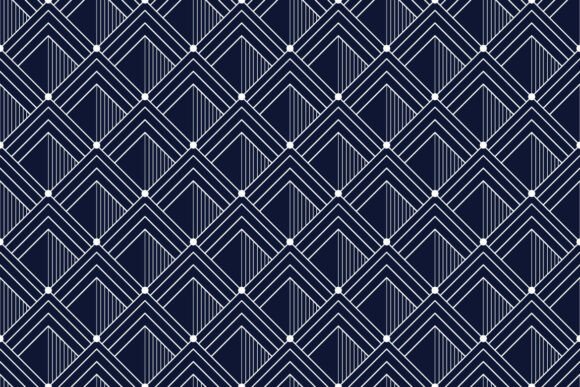
3D Geometric Line Seamless Pattern
In the landscape of modern graphic design, visual continuity and structural clarity are paramount. Designers often seek assets that provide depth without clutter, offering a sophisticated aesthetic that remains versatile across various media. The 3D Geometric Line Seamless Pattern has emerged as a compelling solution for these needs. This design style combines the precision of linear geometry with the illusion of three-dimensional space, creating a repeating motif that feels both contemporary and timeless. For professionals evaluating digital assets for commercial or creative projects, understanding the specific characteristics, applications, and limitations of this pattern type is essential for making informed decisions.
Understanding the Design Architecture
At its core, a 3D Geometric Line Seamless Pattern relies on the strategic arrangement of clean linear shapes to simulate dimensional depth. Unlike flat two-dimensional designs, this approach uses perspective lines, shading techniques, and overlapping forms to trick the eye into perceiving volume. The "seamless" aspect refers to the technical construction of the file, ensuring that when the pattern is tiled, there are no visible breaks or misalignments at the edges. This creates an infinite, continuous surface that can be scaled indefinitely.
The aesthetic is defined by minimalism and boldness. The lines are typically sharp and uncluttered, avoiding organic curves in favor of angular precision. This results in a structure that is visually striking yet restrained. The interplay between negative space and linear elements allows the pattern to breathe, preventing it from becoming overwhelming even when applied to large areas. This balance makes it particularly suitable for backgrounds where text or other focal points need to remain legible.
Evaluating Applications and Use Cases
The versatility of the 3D Geometric Line Seamless Pattern makes it applicable across a broad spectrum of industries. When evaluating whether this asset fits your project, consider the following common use cases:
- Digital Paper and Backgrounds: The seamless nature of the pattern makes it ideal for web backgrounds, presentation slides, and digital scrapbooking. It provides a professional texture that enhances content without distracting from the primary message.
- Textile and Surface Design: In fashion and home décor, this pattern translates well to fabric prints, wallpaper, and upholstery. The geometric repetition aligns naturally with manufacturing processes, allowing for efficient cutting and sewing.
- Packaging and Branding: For brands seeking a modern, tech-forward, or architectural identity, this pattern offers a distinctive touch. It works effectively on product boxes, labels, and corporate stationery, conveying a sense of precision and innovation.
- Print-on-Demand Products: Artists and entrepreneurs utilizing print-on-demand services often leverage such patterns for accessories like phone cases, tote bags, and notebooks. The high-contrast lines reproduce well on various materials, maintaining clarity in both small and large formats.
Benefits of Choosing a Linear 3D Approach
Selecting a 3D Geometric Line Seamless Pattern offers several practical advantages for designers and businesses:
- Scalability: Because the design is vector-based or mathematically constructed, it can be resized from a favicon to a billboard without losing quality. This is crucial for multi-platform branding campaigns.
- Visual Depth Without Complexity: Achieving a 3D effect usually requires complex rendering. However, linear patterns achieve this through clever line work, keeping file sizes manageable and rendering times fast.
- Neutrality and Adaptability: The monochromatic or limited-color palettes often associated with line art allow for easy color customization. A designer can swap out colors to match brand guidelines while retaining the structural integrity of the pattern.
- Professional Aesthetic: The clean lines convey order, stability, and modernity. This psychological association can enhance the perceived value of a product or service.
Considerations and Potential Tradeoffs
While advantageous, this design style is not universally appropriate. Evaluators must consider potential drawbacks before integration:
- Cognitive Load: If the lines are too dense or the contrast is too high, the pattern can become visually noisy. This may interfere with readability if used as a background for heavy text content.
- Suitability for Organic Brands: Brands focused on nature, wellness, or handcrafted aesthetics may find the rigid geometry too cold or industrial. In such cases, organic textures or soft gradients might be more aligned with their messaging.
- Printing Limitations: While excellent for digital use, fine linear details can sometimes suffer during physical printing if the resolution is insufficient or if the material texture interferes with the crispness of the lines.
Decision-Making Framework: Is This Right for You?
To determine if a 3D Geometric Line Seamless Pattern aligns with your goals, assess your project against the following criteria:
Strong Fit Scenarios
This pattern is an excellent choice if your project involves technology, architecture, finance, or logistics—sectors that value precision and structure. It is also highly recommended for UI/UX design, where consistent, non-distracting backgrounds improve user experience. Furthermore, if you require a pattern that can seamlessly wrap around cylindrical objects (like bottles or cups), the mathematical continuity of this design ensures no awkward seams appear.
Alternatives to Consider
If your goal is to evoke warmth, tradition, or human connection, consider alternative patterns such as floral motifs, watercolor textures, or hand-drawn illustrations. Similarly, if the project requires a playful or chaotic energy, abstract splashes or irregular organic shapes may serve better than the ordered symmetry of geometric lines.
Practical Implementation Tips
Once you have selected a 3D Geometric Line Seamless Pattern, proper implementation ensures the best results:
- Color Contrast: Ensure sufficient contrast between the pattern lines and the background. Low-contrast combinations can make the 3D effect disappear, leaving a flat, muddy appearance.
- Layering: Use the pattern as a base layer and place solid-colored overlays or text boxes on top to maintain focus. This technique preserves the aesthetic appeal while ensuring functionality.
- File Format: Always source the pattern in vector formats (such as AI, EPS, or SVG) whenever possible. This guarantees that the lines remain crisp at any scale. If only raster formats (JPEG, PNG) are available, ensure they are high-resolution (300 DPI minimum for print).
- Tiling Verification: Before finalizing any large-scale production, test the tile repeat on the actual medium. What looks seamless on a screen may reveal gaps or overlaps when printed on fabric or paper due to stretching or shrinkage.
Conclusion
The 3D Geometric Line Seamless Pattern represents a convergence of artistic minimalism and technical precision. Its ability to create depth through simple lines makes it a powerful tool for modern design. By carefully evaluating its application against your brand’s identity and functional requirements, you can leverage this pattern to create cohesive, professional, and visually engaging outcomes. Whether for digital interfaces or physical products, its seamless nature and contemporary look offer a reliable foundation for effective visual communication.